1

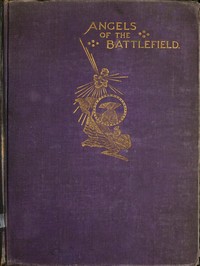
Angels of the Battlefield A History of the Labors of the Catholic Sisterhoods in the Late Civil War — Reading Notes
(0 User reviews)
84
Project Gutenberg
2018
Not confirmed
United States -- History -- Civil War, 1861-1865 -- Religious aspects; Daughters of Charity of St. Vincent de Paul; United States -- History -- Civil War, 1861-1865 -- Civilian relief
Readers of public-domain and historical texts
Project Gutenberg digital edition
en
Edition facts
Words
116,907
Reading time
509 min
Text sections
14
This digital edition of Angels of the Battlefield A History of the Labors of the Catholic Sisterhoods in the Late Civil War — Reading Notes is described by source-level measurements including 116,907 words, 8 hr 29 min estimated reading time, and 14 detected text sections.
The text analysis averages about 19.8 words per sentence, while the detected sections provide another way to judge how the source is divided.
Project Gutenberg metadata also associates the work with “United States -- History -- Civil War, 1861-1865 -- Religious aspects,” connecting these edition facts with the source record’s subject description.
Source:
Project Gutenberg record #57933
George Barton's 1898 history documents the Civil War nursing and relief work of Catholic sisterhoods, drawing on interviews, archives, and correspondence to fill a gap in war literature. The opening preface, accounts of prison ministry, and Mother Francis's biography illustrate the author's method and the sisters' humility.
Editorial Edition Score
4.9/5
★★★★★
★★★★★
Calculated from edition completeness, EPUB availability, text structure and catalogue metadata. Not a user rating.
How this score is calculated
- Description quality20 pts
- Title & short description10 pts
- Source metadata20 pts
- Text length15 pts
- Chapters / structure15 pts
- EPUB file integrity20 pts
Total of 100 points, scaled to a 2.5-5.0 range. Editions with an empty description or a missing EPUB file are not scored.
Edition quality
Public-domain source text
Read the source text
The source text is kept in the dedicated reader, separate from this catalogue record and its commentary.
George Barton opens his 1898 history by declaring that the Catholic sisterhoods' Civil War work has been neglected, appearing only in "fugitive newspaper paragraphs." He aims to fill this gap using personal interviews, convent archives, and correspondence with government officials and veterans. The preface emphasizes the sisters' humility, which made data collection difficult, and notes that nearly one thousand war-related volumes were searched for traces of their labors.
The excerpts reveal Barton's method: he weaves together institutional records, individual biographies, and dramatic vignettes. A scene of sisters pleading with condemned prisoners, an armed guard at the door, shows his reliance on eyewitness testimony. The story of two orphaned girls—their clothes buried after being changed in a yard—demonstrates the concrete, often grim details he includes.
The Preface as a Research Manifesto
Barton's preface is not a mere courtesy; it is a methodological statement. He explains that his work is based on "entirely original sources" and that he has examined "nearly one thousand volumes" on the war, including histories, memoirs of generals, and congressional debates, to find any mention of the sisters. This exhaustive search yielded almost nothing, confirming his claim that the sisterhoods' contributions were overlooked. He thanks specific communities—the Sisters of Mercy who served with the Irish Brigade in the West and the Sisters of St. Joseph at Camp Curtin—indicating that his research relied on cooperation from religious orders. The preface thus sets expectations: the book will be a compilation of firsthand accounts, not a synthesis of existing scholarship.
Prison Ministry and the Condemned
One excerpt describes sisters pleading with doomed men while an armed guard stands at the door and sentinels pace the corridor. The scene is tense: "perseverance conquered," and a clergyman accompanies the men to the scaffold, where they are blindfolded and "launched into eternity" while making acts of contrition. Barton does not name the prisoners or specify the battle or prison, but the detail of the armed guard and the sisters' intercession suggests a high-stakes intervention. The passage illustrates the sisters' role in spiritual care, even in extreme circumstances. It also shows Barton's narrative style—dramatic, with a clear moral arc from peril to resolution.
Orphans and the Limits of Care
A separate excerpt recounts the case of two little girls, daughters of Southern prisoners, whose mother and married sister died in prison. The children are seriously ill; their clothes are changed in the yard and the cast-off garments buried. The younger child, about eight, dies a few days later. The older recovers, is instructed, and at war's end is claimed by her father, who had searched the city. The sisters restore her only after receiving "positive pledges" of proper care. This story highlights the sisters' work beyond hospitals—running orphanages and negotiating with families. Barton includes the burial of clothes as a sanitary detail, and the father's search adds a note of reunion, but the death of the younger child is not softened.
Mother Francis: A Biography in Miniature
Mary Mulholland, later Mother Francis of the Sisters of Mercy, is introduced with her Irish birth in 1808 and childhood emigration. Her desire to join a sisterhood overcame parental opposition. The journey to Chicago in 1843 included a storm on Lake Michigan; she went overboard and told a rescuer, "Leave me to my fate; save the others." He saved her anyway. She received the white veil in 1847 and was professed by dispensation in 1848. During the war, she organized volunteer nurses for Southern battlefields and worked in Chicago prisons and hospitals. A sister recalls soldiers crying out in agony, and a Southern lad of eighteen, thinking she was his mother, died in her arms. Barton quotes Mother Carroll to attest to Mother Francis's influence, noting that she gained admission to facilities where "influential gentlemen and committees were refused admission."
Barton's evidence is episodic, built from interviews and archives rather than a continuous narrative. Readers should attend to the sources he names—specific convents, chaplains, and veterans—as markers of reliability. The excerpts show a work that balances institutional history with personal stories, often grim but never sentimental. The sisters' own reticence, noted in the preface, shapes the book's texture: Barton must infer motives and feelings from actions and sparse records.
Reading about the sisters’ quiet endurance, I thought of another world where devotion met hardship—Wales’s long, lonely fight, captured in Owen Glyndwr and the Last Struggle for Welsh Independence With a Brief Sketch of Welsh History — A Reader’s Guide. Both histories feel like whispered things, kept alive by people who believed in something larger than their own names.
There are no reviews for this eBook.
There are no comments for this eBook.
Reader reflection
Your personal reading reflection
Build a private reading journal entry for this title.
Your progress
0
/
10
2
Was reading this book enjoyable?
3
Would you recommend this book to another reader?
4
How easy was the book to follow?
5
How did the reading compare with what you expected?
6
Could you apply anything you learned?
7
How strongly did the book affect you emotionally?
8
Could you follow the author’s main argument?
9
What changed or sharpened your thinking?
10





![Cover of Military Equipment [1917] — A Closer Reading](https://eqook.com/storage/media/covers/pg54213.jpg)