About 14 minutes
Photos and Maps of Trinity (Atomic Test) Site — Context and Discussion
Modern Nations
3,198 recorded words. 0 minutes difference from this book's estimate.
View Gutenberg source #279
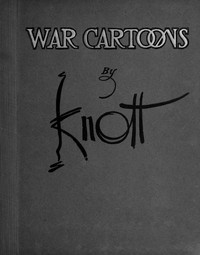
The catalog record for War cartoons — Context and Discussion provides practical reading context through 3,160 words, 14 min estimated reading time, and 3 detected text sections.
The text analysis averages about 24.7 words per sentence, while the detected sections provide another way to judge how the source is divided.
Project Gutenberg metadata also associates the work with “World War, 1914-1918 -- Humor, caricatures, etc.,” connecting these edition facts with the source record’s subject description.
Explore this collection
These alternatives are selected using recorded categories and estimated reading time.
About 14 minutes
Modern Nations
3,198 recorded words. 0 minutes difference from this book's estimate.
View Gutenberg source #279About 27 minutes
Modern Nations
6,153 recorded words. 13 minutes difference from this book's estimate.
View Gutenberg source #75531About 33 minutes
Modern Nations
7,587 recorded words. 19 minutes difference from this book's estimate.
View Gutenberg source #278Search stored excerpts and compare books → Choose by your preferences →
Choices use stored catalog measurements. Estimates vary with reading speed. A shared category is a catalog label, not a claim that two books have the same argument or literary quality.
Search reads excerpt text stored with this catalog and links to its associated Gutenberg record. The connection is stored in the site database; this tool does not recheck that every excerpt is word-for-word identical to that external record. Excerpt search does not cover every chapter and does not verify historical publication dates.
Catalog snapshot checked: 2026-09-25. Coverage: 97 public books, 97 available source excerpts.
Calculated from edition completeness, EPUB availability, text structure and catalogue metadata. Not a user rating.
Total of 100 points, scaled to a 2.5-5.0 range. Editions with an empty description or a missing EPUB file are not scored.
Transcriber’s Note: Italic text is denoted by _underscores_.
WAR CARTOONS BY · JOHN · F. · KNOTT _Cartoonist for the Dallas News_
_Grateful Acknowledgment is made to A. H. Belo & Co., publishers of the Dallas News, for permission to reprint in this book the cartoons that first appeared in the News._
_Copyright 1918 by John F. Knott_
John F. Knott's War Cartoons collects editorial cartoons originally published in the Dallas News during 1918, the final year of World War I. The volume opens with a self-caricature of the artist, signaling the personal and regional lens through which these images were created. The catalog subject classifies the work under 'World War, 1914-1918 -- Humor, caricatures, etc.,' but the excerpts reveal a narrower focus: the cartoons are not a broad survey of wartime humor but a specific product of American home-front propaganda, targeting German militarism and promoting U.S. involvement.
Knott worked for the Dallas News, and the book acknowledges A. H. Belo & Co. for permission to reprint. This regional origin is significant: the cartoons would have reached a Southern U.S. audience, yet the subject matter—German 'repentance' and wartime themes—addresses national concerns. The excerpts do not include any cartoons themselves, only the title page and copyright, so the visual content remains inferred. However, the catalog subject suggests the work fits within a broader genre of wartime caricature, while the specific mention of 'German Repentance' as a cartoon title hints at a moralizing tone common in Allied propaganda.
The book includes a 'Sketch of the Artist by Himself,' indicating that Knott inserted a personal element into what might otherwise be a straightforward collection. This self-portrait likely serves as a signature and a way to humanize the propagandistic content. The excerpts do not describe the sketch, but its inclusion suggests that Knott wanted readers to see the cartoons as the work of a specific individual, not an anonymous editorial voice. This personal touch contrasts with the impersonal nature of many wartime propaganda campaigns, grounding the satire in a recognizable creator.
The provided text consists almost entirely of front matter and Project Gutenberg boilerplate. No actual cartoons or their captions appear in the excerpts. This means the reader cannot assess the visual style, the targets of satire, or the artistic quality from the sample. The catalog subject implies humor, but without seeing the drawings, it is impossible to know whether the tone is savage, lighthearted, or something else. The only cartoon title mentioned—'German Repentance'—suggests a focus on German guilt, but the full range of topics remains unknown. Readers should approach the work expecting a visual experience that the text alone cannot convey.
Because the excerpts contain no cartoons, readers should be prepared to interpret the images as primary sources of American wartime sentiment. Knott's work offers a window into how a regional newspaper cartoonist framed the conflict for a domestic audience. The book's brevity—estimated at 14 minutes of reading—suggests a quick visual impact rather than sustained argument. Approach the cartoons as artifacts of their moment, shaped by the conventions of editorial art and the pressures of wartime patriotism.
That Knott collection stayed with me—all those sharp little cartoons trying to make sense of a war too big for words. It reminded me of how we reach for images when everything feels tangled. I found a similar quiet ache in Pan-Germany — Story, Setting & Ideas, though it takes a steadier, more thoughtful road. Some evenings, I still think about both.
Capture what you thought, learned, and would like to remember.