
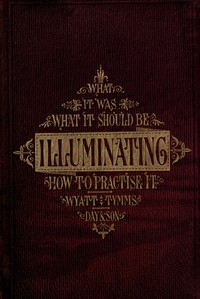
The History, Theory, and Practice of Illuminating by Sir M. Digby Wyatt
(12 User reviews)
2919
Wyatt, M. Digby (Matthew Digby), Sir, 1820-1877
English
"The History, Theory, and Practice of Illuminating" by Sir M. Digby Wyatt is a historical manual written in the mid-19th century. The work delves into the fascinating world of illumination—the art of decorating manuscripts with intricate designs and vibrant colors. It aims to provide a concise yet comprehensive overview of the topic, catering to bo...
the book, Wyatt discusses the challenges of condensing a substantial topic into a manageable volume without losing clarity. He emphasizes the interplay between the historical significance of illumination and the technical skills required for its practice. The opening provides insights into the roots of illuminating art, tracing its origins from ancient civilizations, such as the Egyptians, through classical antiquity, and into the evolution of styles during the Middle Ages, detailing the materials and methods employed in creating these exquisite manuscripts. Through historical context, Wyatt sets the stage for a deeper exploration of illumination's aesthetic and practical aspects. (This is an automatically generated summary.)
🔓 Usage Rights
This digital edition is based on a public domain text. It serves as a testament to our shared literary heritage.
Thomas Martin
2 years agoThe layout of the digital version made it easy to start immediately, the author doesn't just scratch the surface but goes into meaningful detail. A refreshing and intellectually stimulating read.
Kimberly Rodriguez
11 months agoThe digital index is well-organized, making research much faster.
Thomas Johnson
4 months agoA sophisticated analysis that fills a gap in the literature.
Robert Thompson
2 days agoI was particularly interested in the case studies mentioned here, the attention to detail regarding the core terminology is flawless. This is a solid reference for both beginners and experts.





Sarah Thompson
5 months agoI wanted to compare this perspective with traditional views, the author manages to bridge the gap between theory and practice effectively. Definitely a five-star contribution to the field.