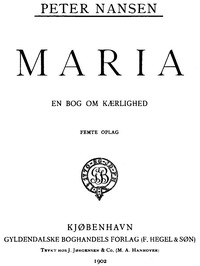
Maria: En Bog om Kærlighed by Peter Nansen
First published in 1894, Peter Nansen's Maria: En Bog om Kærlighed (Maria: A Book About Love) is a slim novel that packs a surprising emotional punch. Forget epic battles or grand adventures—the entire story unfolds through a series of letters from a man named Axel to his friend. In them, he recounts meeting and falling completely for a young woman named Maria. The plot is simple on the surface: a love story. But the magic—and the tension—is in how we experience it.
The Story
Axel, our narrator, is captivated by Maria's beauty and what he sees as her pure, almost childlike spirit. He writes passionately about their time together, painting a picture of an ideal, almost sacred romance. He wants to possess her completely, to shield her from the world and keep her just for himself. But here's the catch: we only have Axel's word for all of this. Maria never speaks for herself in the novel. We see her only through the lens of his desire and his growing obsession. As his letters continue, you start to wonder. Is Maria really this flawless angel, or is Axel creating a character to suit his own needs? The story becomes less about their romance and more about the unsettling power of one person's perspective.
Why You Should Read It
I picked this up expecting a quaint period romance, but it's so much sharper than that. Nansen gets right under the skin of what infatuation can do to a person. Axel isn't a villain; he genuinely believes in his love. But his letters slowly reveal how love can twist into something controlling. The book made me think about how often we fall in love with an idea of a person, not the person themselves. It's a brilliant, subtle character study. For a book written over a century ago, its questions about male gaze, narrative control, and the ethics of love feel incredibly relevant.
Final Verdict
This is a perfect pick for readers who love psychological depth and beautiful, clear prose. If you enjoyed the intimate, confessional style of novels like Dangerous Liaisons or the quiet intensity of a film like Portrait of a Lady on Fire, you'll find a lot to love here. It’s also a great, accessible entry point into Scandinavian literature. Just be ready—it’s a quick read, but it sticks with you, leaving you to puzzle over Maria's true story long after you've finished Axel's.
No rights are reserved for this publication. Share knowledge freely with the world.