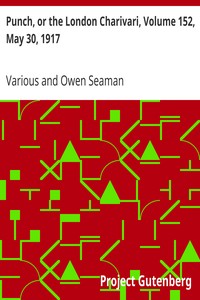
Punch, or the London Charivari, Volume 152, May 30, 1917 by Various
Don't go in looking for a traditional novel. Punch, or the London Charivari was a weekly magazine, and this volume collects one single issue from late May 1917. There's no continuous plot. Instead, you're flipping through the same mix of content a reader would have 106 years ago: political cartoons, short humorous essays, witty poems, and fictional dialogues. The 'story' is the week itself. The Battle of Arras is winding down, U-boats are threatening supplies, and at home, Britons are dealing with air raids and shortages. The magazine holds up a funhouse mirror to all of it.
Why You Should Read It
This is where it gets fascinating. The humor is your guide to what people cared about, what annoyed them, and what they were allowed to laugh at. A cartoon about a grocer hoarding sugar speaks volumes about rationing anxieties. A poem mocking the convoluted instructions for blackout material is funnier—and more telling—than any statistic. You see the propaganda (gentle jabs at the Kaiser, hearty support for the troops) but also a very British stubbornness to not let war dominate every thought. The characters are everyone: the harassed housewife, the befuddled bureaucrat, the cheeky schoolboy. Reading it feels like eavesdropping on a national conversation where the primary tool is a raised eyebrow and a well-timed pun.
Final Verdict
This is a niche pick, but a brilliant one for the right reader. It's perfect for history buffs who want to move beyond dates and generals to hear the era's own voice. If you love social history, satire, or vintage cartoons, you'll be in heaven. It’s also great for writers looking to understand period tone and attitude. Fair warning: some references are obscure, and the humor is of its time. But if you're curious about the human side of history—how people joke, cope, and carry on—this volume is a direct and delightful line to the past. Think of it less as a book and more as a conversation starter with 1917.
This book is widely considered to be in the public domain. You do not need permission to reproduce this work.
Ashley Martin
7 months agoGreat read!
Mary Garcia
1 year agoAfter hearing about this author multiple times, the clarity of the writing makes this accessible. This story will stay with me.
Edward Walker
3 months agoThe fonts used are very comfortable for long reading sessions.