
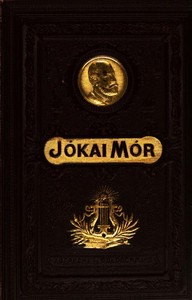
A két Trenk; Trenk Frigyes by Mór Jókai
I’ll be honest, I picked this up because the premise hooked me immediately. It’s 18th-century Hungary, and young Baron Frederick Trenk—rich, handsome, but utterly bored with his privileged life—arrives at his uncle’s castle. On the very same day, another Frederick Trenk shows up. This one is a poor, clever soldier of fortune with nothing but his wits. Through a perfect storm of confusion, the castle servants mistake the pauper for the baron. The real baron, seeing a chance for an adventure without responsibilities, decides to play along and lets the impostor take his place.
The Story
The story follows both Trenks as they live each other's lives. The poor Trenk, now treated as a noble, has to navigate high-society manners, a potential engagement to a beautiful countess, and sneaky political rivals—all while trying not to get found out. Meanwhile, the real Baron Trenk, disguised as a simple man, finds a kind of gritty freedom he never knew. He falls in with a band of outlaws, experiences life without a title, and even finds a more genuine love. Their paths keep almost crossing, creating a chain of hilarious and tense moments as the web of deception grows more tangled. The question driving the plot is simple: how will this end? Will they ever switch back, and do they even want to?
Why You Should Read It
This book is so much fun. Jókai writes with a twinkle in his eye. It’s not just a farce; it’s a sharp look at class and identity. He shows us that nobility isn’t about blood, but action and character. The poor Trenk often acts more honorably than the real aristocrats around him. I found myself rooting for both main characters, which is the book's magic trick. You understand why each man is happier in the other's shoes. It’s a romantic adventure, full of sword fights and secret meetings, but it’s also quietly thoughtful about what makes us who we are.
Final Verdict
Perfect for readers who love a classic adventure with a clever twist. If you enjoy the mistaken-identity chaos of Shakespeare’s comedies or the rollicking historical feel of Dumas, you’ll feel right at home here. Don’t let the 19th-century publication date scare you—the translation I read felt fresh and lively. It’s a hidden gem that deserves more attention. Pick it up for a genuinely entertaining escape that’s both exciting and surprisingly sweet.
Legal analysis indicates this work is in the public domain. Knowledge should be free and accessible.
Elizabeth Brown
2 years agoIt took me a while to process the complex ideas here, but the narrative arc keeps the reader engaged while delivering factual content. The insights gained here are worth every minute of reading.
John Jones
4 months agoI stumbled upon this title during my weekend research and the historical context mentioned in the early chapters is quite enlightening. An excellent example of how quality digital books should be formatted.
Linda Wilson
3 months agoThe balance between academic rigor and readability is perfect.
Mary Moore
9 months agoLooking at the bibliography alone, the logic behind each conclusion is easy to follow and verify. This exceeded my expectations in almost every way.


Jennifer Lopez
8 months agoThis was exactly the kind of deep dive I was searching for, the narrative arc keeps the reader engaged while delivering factual content. An excellent example of how quality digital books should be formatted.